Women's Prize for Fiction: The Judging Process

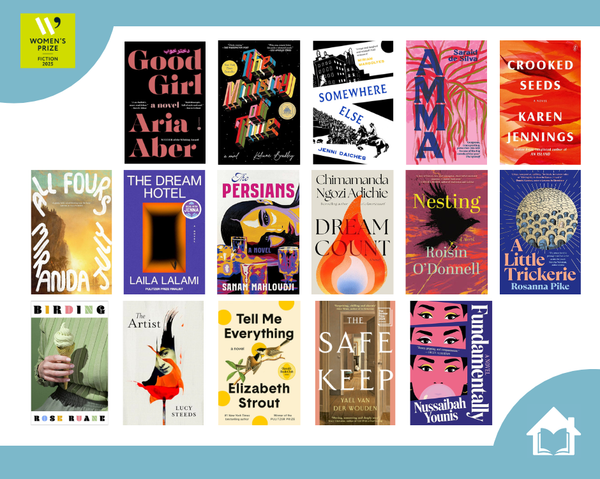
The Women’s Prize longlist 2025 has been announced last week, on March 4. I thought it’d be nice to go over the history of the prize and to look at how the judging process works. If you're interested in finding out more about my reaction to the 2025 Women's Prize for Fiction longlist, my previous post focuses on that. I'll just say that, overall, I was really pleased with the 16 titles that were selected this year.
The History of the Prize
The Women's Prize for Fiction is one of the UK’s most prestigious and influential literary prizes. Established in 1996, its aim is to recognize and celebrate the literary achievement of female writers, and to cultivate a global community of readers.
The inspiration for the Prize can be found a few years prior to 1996, when none of the novels shortlisted for the Booker Prize of 1991 was by a female author, despite 60% of novels published that year being by written by women. That's when a group of men and women working in the industry gathered to discuss and research the issue. What they found was that women's literary achievements were often ignored by literary prizes. And so the idea for the Women's Prize started to take shape.
The Prize
According to the Women's Prize Trust's website, the Women's Prize is awarded annually to the author of the best full-length novel of the year written in English and published in the UK. Every year, a panel of five women select the winner, who receives £30,000 and a bronze statuette called “The Bessie”, created by artist Grizel Niven.
A sister prize of £30,000, the Women's Prize for Non-Fiction, has also been running since 2024. This year, the non-fiction longlist was announced on February 12 2025, a week before the fiction longlist was revealed on March 4.
The Key Dates
These are the Women's Prize for Fiction 2025 key dates to keep in mind:
- Submission Deadline: August 30 2024
- Longlist Announced: March 4 2025
- Shortlist Announced: April 2 2025
- Winner Announced: June 12 2025
The Judging Process
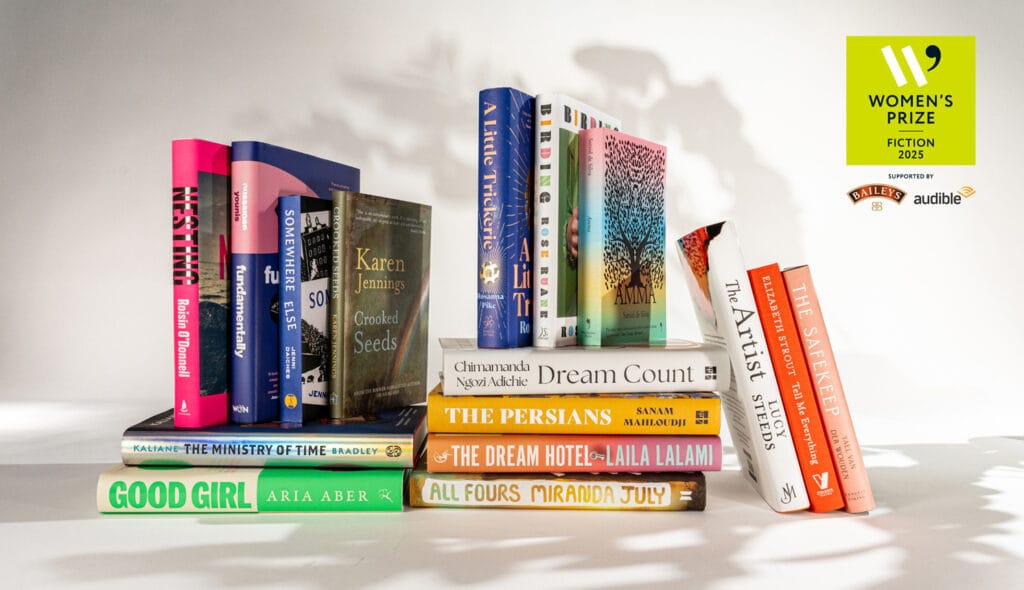
The whole selection process for the Women's Prize for Fiction starts in the summer of the previous year, when UK publishers are invited to submit their eligible books. There are a few rules to follow and it's quite fun to find out what they are.
The most important one is that, to be considered, a book must be published in the UK between April 1 of the year prior to the Prize and March 31 of that Prize's year. This means that, to be submitted for the Women's Prize for Fiction 2025, each entry must be published by a publisher in the UK between April 1 2024 and March 31 2025. The author must also be still alive at time of submission.
The number of entries that each publisher can submit is then based on the number of fiction titles released by them during the eligibility period. So, if a publishing house releases fewer than 15 titles, it can submit 1 book, but if it releases 15 titles or more then it can put forth up to 2 books.
Each publisher is also given the opportunity to suggest a “call-in” title. It's like a wild card that allows you to put forth a book that you believe deserves attention without expending one of your formal submission spots. The judges are not in any form obligated to read these call-in titles, however. It's up to them whether they decide to call those books in and add them to their reading pile.
Finally, there's also the concept of "free passes", which means that if an author has been shortlisted in the past ten years, or they won the prize in any previous year, the publisher can submit their book without using one of their formal submission spots.
Once this is done, and all book entries have been submitted, judges immediately start their voracious reading of their allocated books. This determined the longlist, announced last March 4, which will then be narrowed down to the shortlist and the winner.
The whole process is based on three core tenets that have always been at the center of the Prize: excellence, originality and accessibility.
The 2025 Judges

This year, the 2025 Women’s Prize for Fiction panel is chaired by author Kit de Waal. She's best known for her novel My Name is Leon, also adapted for television by the BBC in 2022, and she's known for her efforts to help improve working class representation in the arts, which I think is a great endeavor and one that might reflect in her literary taste, and therefore in the selection of the 2025 Prize winner.
Joining Kit is novelist and journalist Diana Evans, who won the very first Women’s Prize award for debut novelists in 2006 with A House for Alice, and was shortlisted for the main Women's Prize for Fiction in 2019 with her novel Ordinary People.
We then have Bryony Gordon: author, journalist and mental health campaigner. In her career she's written for both the Telegraph and the Daily Mail and six of her novels, including Mad Girl and You Got This are Sunday Times bestsellers. Given her widely recognized work as a mental health campaigner, we can expect her to be particularly sensible to how the theme of mental health is treated in fiction.
Judge No. 4, Deborah Joseph is European Editorial Director and Editor-in-Chief of Glamour UK. Deborah speaks regularly on the topic of women’s empowerment and the challenges facing working mothers and I imagine that she's particularly up-to-date with current trends, more contemporary themes and novels, as well as the world of fashion and celebrities.
Finally, the panel is rounded up by Amelia Warner, musician and composer known for her award-winning film scores. Her interest for story-telling in its various forms and her experience in the music and cinema industry probably make her particularly attuned (pun intended) to novels that easily work across media and, I would assume, that have a certain musicality, either because of their style, dialogue, references, or narrative.
Previous Women's Prize Winners
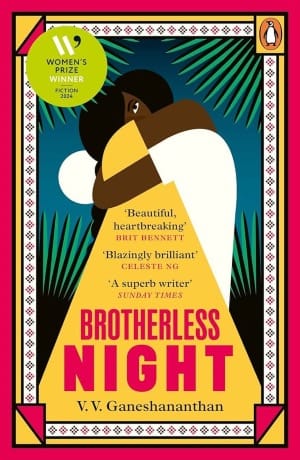
- 2024: Brotherless Night, by V. V. Ganeshananthan (Fiction)
- 2024: Doppelganger, by Naomi Klein (Non-Fiction)
- 2023: Demon Copperhead, by Barbara Kingsolver (Fiction)
- 2022: The Book of Form & Emptiness, by Ruth Ozeki (Fiction)
- 2021: Piranesi, by Susannah Clarke (Fiction)
And that's it!
Don't forget that the winner of the 2025 Women's Prize for Fiction will be announced on June 12 2025, along with the winner for the Women's Prize for Non-Fiction. You can read about my reaction to the 2025 Women's Prize for Fiction longlist here.