Women's Prize for Fiction 2025 Longlist Reaction

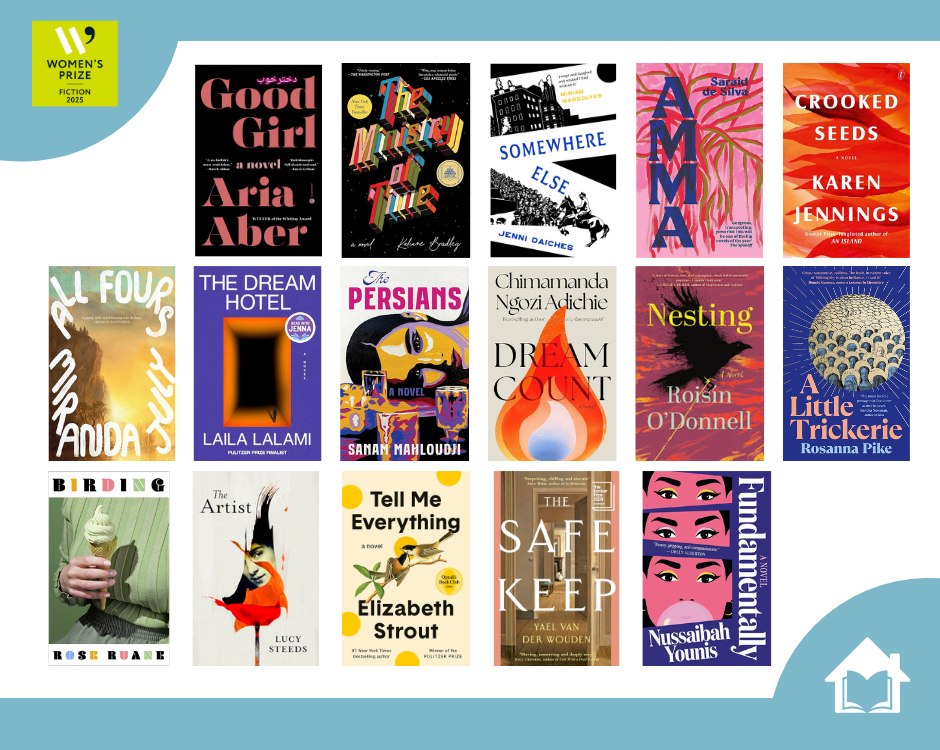
The Women’s Prize longlist 2025 has been announced last week, on March 4. I thought it’d be nice to go over the 16 nominations for this year and briefly comment on the ones that I find the most interesting. At a quick glance, I can see that there are multiple novels that were already on my radar and this promises to be a very exciting list, with many titles striking my fancy.
The 2025 Women’s Prize for Fiction longlist nominees:
(below is a brief description of novels that appeal to me the most)
- Good Girl by Aria Aber (Bloomsbury Publishing)
- The Ministry of Time by Kaliane Bradley (Sceptre, Hodder & Stoughton, Hachette)
- Somewhere Else by Jenni Daiches (Scotland Street Press)
- Amma by Saraid de Silva (Weatherglass Books)
- Crooked Seeds by Karen Jennings (Holland House Books)
- All Fours by Miranda July (Canongate Books)
- The Dream Hotel by Laila Lalami (Bloomsbury Circus, Bloomsbury Publishing)
- The Persians by Sanam Mahloudji (4th Estate, HarperCollins)
- Dream Count by Chimamanda Ngozi Adichie (4th Estate, HarperCollins)
- Nesting by Roisín O’Donnell (Scribner, Simon & Schuster)
- A Little Trickerie by Rosanna Pike (Fig Tree, Penguin General, Penguin Random House)
- Birding by Rose Ruane (Corsair, Little, Brown Book Group, Hachette)
- The Artist by Lucy Steeds (John Murray, John Murray Press, Hachette)
- Tell Me Everything by Elizabeth Strout (Viking, Penguin Random House)
- The Safekeep by Yael van der Wouden (Viking, Penguin Random House)
- Fundamentally by Nussaibah Younis (Weidenfeld & Nicolson, Orion Publishing Group, Hachette)
Good Girl by Aria Aber
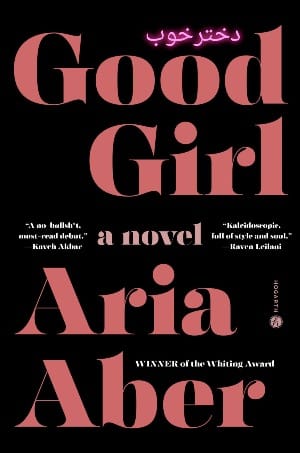
This is a debut novel set on the backdrop of Berlin’s artistic underground. It's the coming-of-age story of Nila, a German young woman and artist born to Afghan refugee parents that she keeps disappointing. In the haze of Berlin’s legendary nightlife, Nila meets Marlowe, an American writer who opens her eyes to a life of personal and artistic freedom. But as ugly racial tensions begin to roil Germany, Nila and her community are also impacted.
I am very intrigued by the premise of this story centered around identity, love, family, and self-discovery, and Aria Aber's voice has been praised for being unique and full of style and soul, something that always draws me in.
The Ministry of Time by Kaliane Bradley
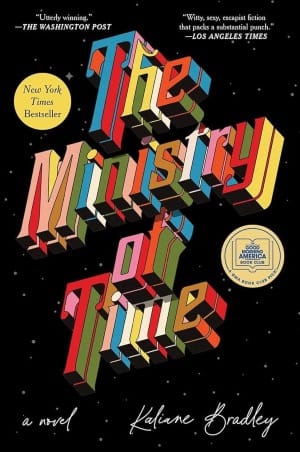
Another debut novel and one that has already won the hearts of many. I have to say, it makes me happy to see a sci-fi novel in the longlist.
In the near future, a civil servant is offered the salary of her dreams to work for a recently established government ministry whose job is to establish whether time travel is feasible. She's tasked with working as a “bridge”, living with, assisting, and monitoring expat 1847, aka Commander Graham Gore.
And so begins a roommate sort of situation that sees Commander Gore at first a little disoriented to be living with an unmarried woman and other outlandish concepts such as “washing machines,” “Spotify,” and “the collapse of the British Empire.” But over time, their odd dynamic evolves into love and our “bridge” is forced to reckon with the possibility that what she does next could be changing the future.
Described as witty, fresh and thrilling, this is a genre-bending story that mixes time travel romance, spy thriller, and workplace comedy, something I didn't know I needed until suddenly I do.
Amma by Saraid de Silva
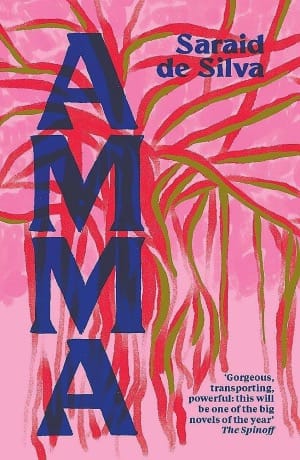
The story starts in 1951, Singapore, when ten-year-old Josephina kills her abuser. This event becomes the defining moment in the lives of Josephina, her daughter Sithara, and her granddaughter Annie. As Annie sets out across the world to discover what happened to fracture her family, this multigenerational drama explores how the past lives with us forever, and wherever we are.
I am curious to learn more about the Sri Lankan diaspora and the fact that the book travels to Sri Lanka, Singapore, New Zealand, Australia and London is something that I find very appealing.
The Hotel Dream by Laila Lalami
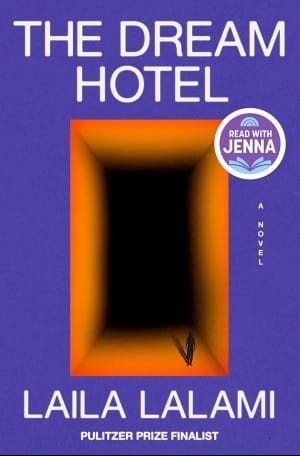
This is the second sci-fi novel of the longlist, with a near future setting that certainly rings of dystopian.
In The Hotel Dream, we follow Sara, who's just landed at LAX airport when agents from the Risk Assessment Administration pull her aside and inform her that she will soon commit a crime. Using data from her dreams, their algorithm has determined that she is at imminent risk of harming her husband, and so she's transferred to a retention center, where she is held alongside other women. Months pass and Sara, who was supposed to be kept under observation for only twenty-one days, seems no closer to release. Then one day, a new resident arrives, disrupting the order of the facility and leading Sara on a collision course with the very companies that have deprived her of her freedom.
Eerie, urgent, and reminding me of novels like Margaret Atwood's The Handmaid's Tale, The Dream Hotel explores the risks of invasive surveillance technology and I'm really eager to read it.
Dream Count by Chimamanda Ngozi Adichie
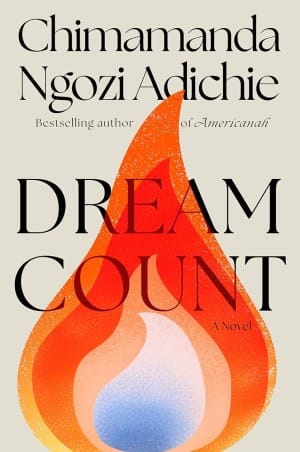
A most anticipated book of the year for many people, this is the story of four women and their loves, longings, and desires.
We follow Chiamaka, a Nigerian travel writer living in America alone in the midst of the pandemic; Zikora, her best friend and a successful lawyer who, betrayed and brokenhearted, decides to turn to the person she thought she needed least; Omelogor, Chiamaka’s wealthy, bold, and outspoken cousin in Nigeria; and Kadiatou, Chiamaka’s housekeeper, proudly raising her daughter in America until she faces an unthinkable hardship that threatens all she has worked for.
I know the author has been politically controversial in recent years and that her association with this prize in particular is problematic, given that at its core it promotes accessibility and inclusion. This is an especially relevant in today's turmoil and I personally am unaware of then full scope of the issue and how Adichie's comments about who is a woman have been expressed. I promise to learn more about it.
When I read it, I found Adichie's writing in Americanah both bold and daring in how it talks about race. To me, she explored delicate themes with great openness and offered a multitude of perspectives on the subject. Ultimately, I expect her future writing to be similar and that's why I want to read more from this author, including Dream Count, at least for now.
I respect other people's sensitivity and how they decide to respond to this controversy. But I really hope it won't overshadow or dominate the discourse on the Women's Prize.
Nesting by Roisín O’Donnell
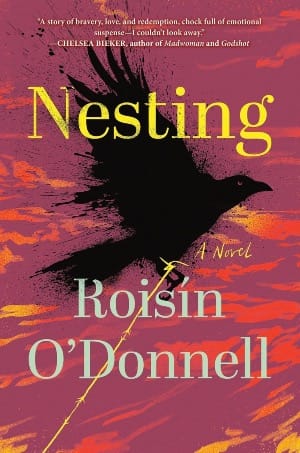
In this debut novel, we follow the life-affirming story about one woman trying to leave her marriage and start over. On a bright spring afternoon, all Ciara Fay knows for certain, as she's driving her two young daughters away, is that home is no longer safe. On the surface, she has a perfect life: her husband, Ryan, is a good provider, even kind and attentive, and there's another baby on the way. But he also monitors Ciara's every move, flies into unpredictable rages, and has isolated her from work, friends, and her family. With no job and no support, Ciara struggles to provide a sense of normalcy to her daughters while living in a room on a hotel floor reserved for women life her. She starts questioning whether fleeing was the right thing and she finally wavers to Ryan as he tries to win her back. He never hit her, after all, and the girls need a stable home.
This novel promises to be devastating and suspenseful, but, we're told, it is ultimately uplifting. It is a story of gaslighting and emotional abuse, but also love, family, and overcoming unmentionable difficulties. It is a story I think it's important we read, or at least I know I do.
A Little Trickerie by Rosanna Pike
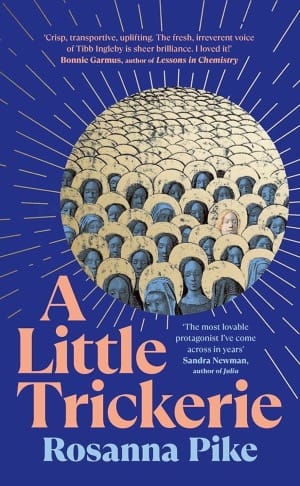
This one is I think a little odd, but also incredibly interesting.
Born a vagabond in Tudor England, Tibb Ingleby has never had a roof of her own. Her mother has taught her that if you're not too bound by the Big Man's rules, there are many ways a woman can find shelter in this world. Now orphaned and alone, Tibb discovers there are people in England who will care for her, as well as those who mean her harm. And there are a great many others who are prepared to believe just about anything. So, with her new friends, Tibb conjures an audacious trickerie to escape the shackles society has placed on them. But as their hoax takes on a life of its own, crowds–and vengeful enemies–gather at their door...
A Little Trickerie looks like a historical novel unlike any I've ever read. Both funny and moving, with a ragtag cast of characters and an unforgettable anti-heroine mixed up in a great trickery, I have no doubt it will be entertaining.
Birding by Rose Ruane
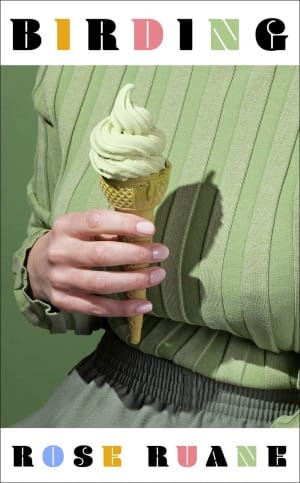
Birding strikes me as a very atmospheric, eerie novel that for its setting and tone might be reminiscent of a Graham Greene's novel. I'm not sure I want to read it yet, but I want to keep my eyes open for other people's reviews on BookTube.
In a small seaside town, two women pass each other on the promenade, as yet unaware of each other's existence. We have Lydia, who in the nineties was a teen pop star with little idea of how to live, letting the world happen to her. Faced with the #MeToo stories in the news cycle and a famous former lover's reappearance, she's less and less sure now that what happened to her was okay.
And then we have Joyce, middle-aged, still living with her mother Betty. With their matching dresses, hairdos and makeup, they are the local oddballs living a life of unerring routine. One misstep from Joyce can ruin Betty's day; so Joyce treads carefully. But recently, something like anger is asserting itself, like a caged thing realising it should escape.
As Lydia and Joyce both try to untangle the damaging details of their past in the hope of a better future, their separate lives are set on an unlikely collision course.
Tell Me Everything by Elizabeth Strout
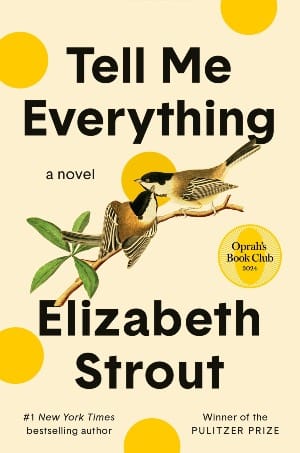
This novel picked my interest for two reasons. One. I've been meaning to explore Elizabeth Strout's universe for a while. She tends to re-visit the same small town in Maine in her novels and show how life evolves for her characters there, despite the books all working as standalones. I am fascinated by this concept. Two. My mum has un inexplicable love for Maine. And in Tell Me Everything, the author returns to the town of Crosby, Maine, and to her characters as they deal with a shocking crime, fall in love, and grapple with the question “What does anyone’s life mean?”
It is a novel about ordinary people and the importance of stories and relationships. And I'm ready to step into it.
The Safekeep by Yael van der Wouden
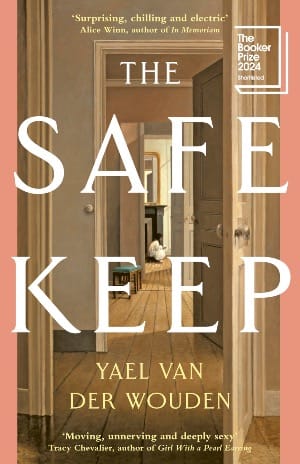
The Safekeep is a debut novel that's been on everybody's lips since it was longlisted–and then shortlisted–for the Booker Prize in 2024. It seems to be most people's darling when it comes to last year's Booker Prize. Some of my favorite BookTubers–Ben Reads Good, LydLoves, Mercy's Bookish Musings–speak highly about it, so it is inevitable that it a book I want to read.
The novel is set in 1961, in the rural Dutch province of Overijssel. The war is truly over, as even the marks of the war on the land have disappeared. Living alone in her late mother’s country home, Isabel leads a life of routine and discipline. But all is upended when her brother leaves his new girlfriend Eva at Isabel’s doorstep as a guest, to stay for the season.
Eva is Isabel’s antithesis: she sleeps late, walks loudly, and touches things she shouldn’t. And when things start disappearing around the house, Isabel’s suspicions begin to spiral. But paranoia gives way to infatuation, leading to a discovery that unravels all Isabel has ever known.
It's described as unnerving and deeply sexy, a razor-sharp, perfectly plotted tale of desire, suspicion, and obsession, and a powerful exploration of the legacy of WWII. Very mysterious, but very intriguing, somehow giving me Sarah Waters' vibes.
Fundamentally by Nussaibah Younis
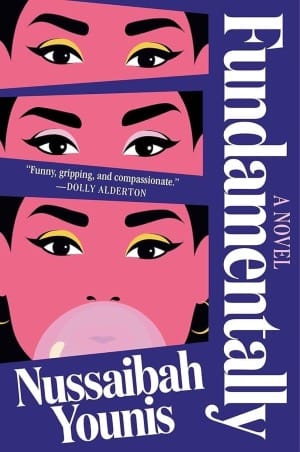
Finally, Fundamentally. We follow Dr. Nadia Amin, an academic from London who flees from heartbreak and lands in Iraq with a one-of-a-kind job offer: the opportunity to lead a deradicalization program for the ISIS-affiliated women held in Iraqi refugee camps.
In Iraq, however, she quickly realizes she’s in over her head. But at the camp Nadia meets Sara, one of the younger refugees, whose accent immediately gives her away as a fellow East Londoner. Nadia feels inexplicably drawn to the rude girl in the diamanté headscarf and she leaves the camp determined to get Sara home.
The system she finds herself trapped in, however, is a quagmire of inaction and corruption. And Nadia makes an impossible decision leading to ramifications she could have never imagined.
Described as funny, bold, and audacious, this debut novel guarantees to handle important questions with seriousness and great humor. Fundamentally, I'm intrigued.
And that's it!
Shortlist Announced: April 2 2025
Winner Announced: June 12 2025
As I wait and speculate before the shortlist will be announced, I've decided the next post will be focusing on the history and the selection process of the Women's Prize, so that I can better understand it. Please stay tuned!
You can watch the official video announcing the 2025 Women's Prize for Fiction longlist here: